
What Is Included in HVAC Maintenance?
If you want your heating and cooling system to run efficiently, reliably, and safely, regular HVAC maintenance is essential. At Supreme Heating & Air Conditioning, preventative service helps homeowners and businesses avoid surprise breakdowns, improve comfort, and extend the life of their equipment. Whether you need a seasonal air conditioning tune-up or heating maintenance, a professional inspection can catch small issues before they become expensive repairs.
In this guide, we’ll explain what’s included in HVAC maintenance, why it matters, and how routine care supports better performance throughout the year.
Why HVAC Maintenance Matters
Your HVAC system works hard in every season. In the summer, your air conditioner handles heavy cooling demand. In the winter, your furnace or heating system must keep your space comfortable during cold weather. Without regular maintenance, parts wear down faster, efficiency drops, and the risk of an unexpected failure increases. Routine maintenance helps improve energy efficiency, reduce repair costs, and prevent breakdowns during peak use.
For New Jersey property owners, that kind of preventive care is especially valuable, because weather extremes can put added stress on your equipment.
What Is Typically Included in HVAC Maintenance?
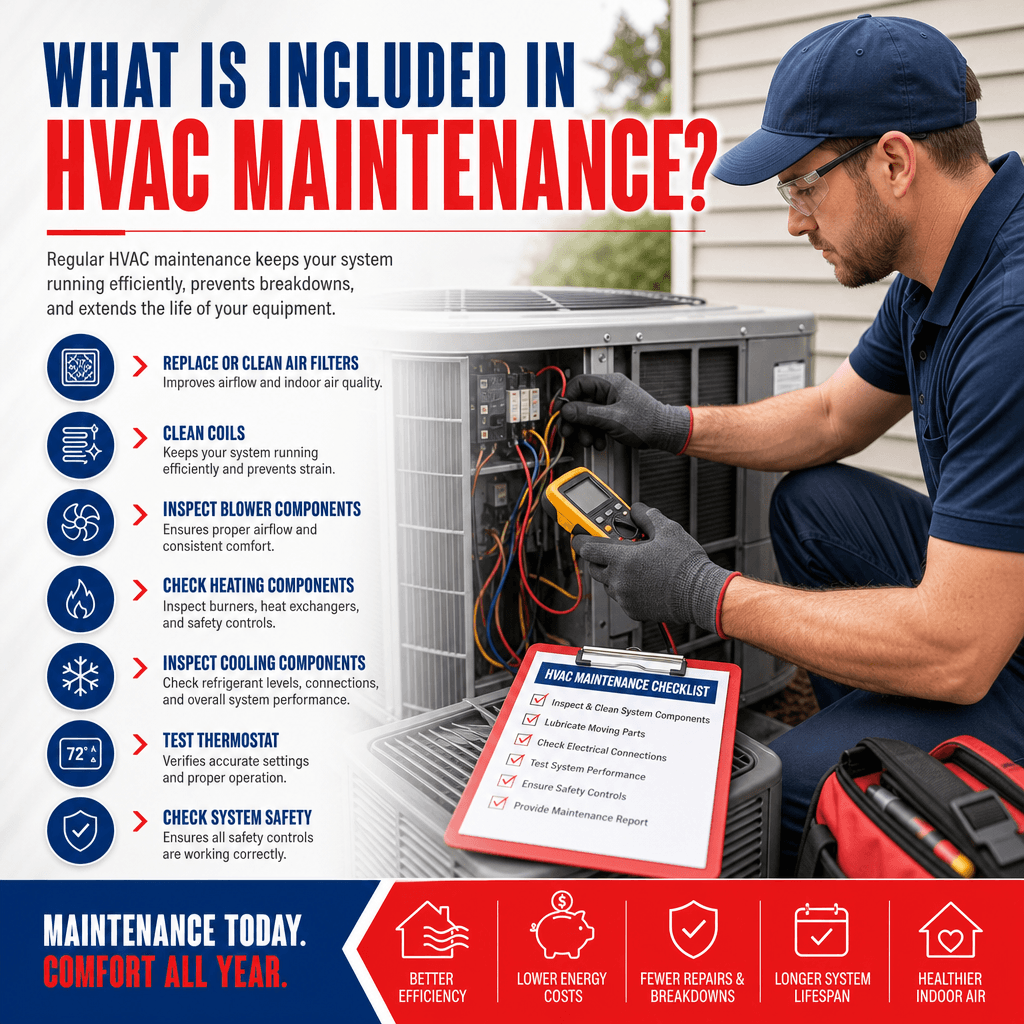
A professional HVAC maintenance visit is more than just a quick filter change. It’s a detailed inspection, cleaning, and tune-up process designed to keep the system operating at peak performance. While the exact checklist can vary by equipment type, a standard maintenance service usually includes the following.
1. Air Filter Inspection and Replacement
One of the most important maintenance tasks is checking the air filter. A dirty filter restricts airflow, makes the system work harder, and can reduce indoor air quality. During maintenance, the technician will inspect the filter and clean or replace it as needed.
2. Electrical Connection Inspection
Loose or damaged electrical connections can create safety issues and lead to system failure. During maintenance, a technician will inspect wiring, tighten connections, and look for signs of wear or corrosion.
3. Coil Cleaning
Dirty evaporator and condenser coils reduce efficiency and make it harder for your HVAC system to transfer heat properly. Maintenance usually includes coil inspection and cleaning to help restore performance and prevent strain on the unit.
4. Condensate Drain Cleaning
Your HVAC system removes moisture during operation, and that water must drain properly. If the condensate drain becomes clogged, it can lead to water damage, leaks, or even system shutdowns. A maintenance visit typically includes checking and clearing the condensate drain.
5. Refrigerant Level Check
Low refrigerant can cause poor cooling, reduced efficiency, and potential compressor damage. A technician will measure refrigerant levels and make adjustments if needed to keep the system cooling properly.
6. Lubrication of Moving Parts
Motors, fans, and other moving components can wear out more quickly if they aren’t properly lubricated. Maintenance helps reduce friction and supports smoother, quieter operation.
7. Thermostat Testing and Calibration
Even a perfectly functioning HVAC system can underperform if the thermostat is inaccurate. During maintenance, the technician will test the system controls and calibrate the thermostat so temperatures are regulated correctly.
8. System Performance Testing
A maintenance visit also includes operational testing to make sure the entire system is working the way it should. This can involve checking startup and shutdown cycles, airflow, temperature output, and overall system response.
What HVAC Maintenance Helps Prevent
Routine maintenance is designed to prevent the common problems that lead to comfort issues and expensive service calls. Regular tune-ups help reduce sudden malfunctions, lower energy bills, and prevent costly emergency repairs.
Some of the most common issues maintenance can help prevent include:
- Poor airflow
- Higher utility bills
- Uneven heating or cooling
- Frequent cycling
- Frozen coils
- Water leaks
- Electrical problems
- Premature system wear
If your system is already showing signs of trouble, it may be time to schedule service before the issue gets worse. You can learn more on our A/C maintenance page or explore our residential cooling services.
How Often Should HVAC Maintenance Be Done?
In most cases, HVAC systems should be serviced at least once or twice a year, depending on the type of equipment and how heavily it’s used. Many homeowners schedule:
- Spring maintenance for the cooling system
- Fall maintenance for the heating system
This seasonal approach helps ensure your equipment is ready before peak demand hits. Keeping up with regular service is one of the best ways to keep your system running efficiently and avoid unexpected breakdowns during heavy-use seasons. To stay ahead on the heating side, our heating maintenance service keeps your furnace or heat pump ready for winter.
Professional HVAC Maintenance vs. DIY Care
There are a few maintenance tasks homeowners can handle on their own, such as:
- Changing air filters regularly
- Keeping outdoor units free of debris
- Checking thermostat settings
- Making sure vents and registers aren’t blocked
However, many important maintenance steps require a trained technician. Electrical checks, refrigerant testing, coil cleaning, and system diagnostics should always be handled by a professional. Supreme HVAC’s certified technicians are trained to work on all makes and models and provide detailed maintenance service for long-term reliability.
Benefits of Regular HVAC Maintenance
When HVAC maintenance is done consistently, you can expect several important benefits:
- Better energy efficiency
- Lower monthly utility costs
- Improved indoor comfort
- Longer equipment life
- Fewer emergency repairs
- Better indoor air quality
- Safer system operation
For more homeowner guidance on keeping your system efficient, ENERGY STAR’s heating and cooling guide is a helpful resource.
Frequently Asked Questions
How long does an HVAC maintenance visit take? A typical residential tune-up takes about an hour, though it can run longer for older systems or when a technician finds an issue that needs a closer look.
Is HVAC maintenance really worth it? Yes. Regular maintenance keeps your system efficient, helps prevent unexpected breakdowns, extends equipment life, and is often required to keep your manufacturer’s warranty valid.
Should I maintain my heating and cooling systems separately? Ideally, yes — cooling is best serviced in spring and heating in fall, each ahead of its busy season. A technician can often address both during one visit if the timing works for you.
What happens if I skip HVAC maintenance? Skipping service lets small problems like dirty coils, low refrigerant, or worn parts build up over time, leading to reduced efficiency, higher energy bills, more repairs, and a shorter system lifespan.
Schedule HVAC Maintenance With Supreme Heating & Air Conditioning
If you want dependable performance from your HVAC system, routine maintenance is one of the smartest investments you can make. Supreme Heating & Air Conditioning provides complete residential and commercial HVAC service throughout Middlesex, NJ and surrounding areas, including maintenance, repair, and installation. With over 35 years of experience, our team is focused on reliable service, honest recommendations, and long-term comfort.
To keep your system running smoothly, explore our HVAC services or contact us to schedule your next tune-up. Regular HVAC maintenance helps protect your comfort, your system, and your budget — and if it’s been a while since your last visit, now is a great time to schedule service.